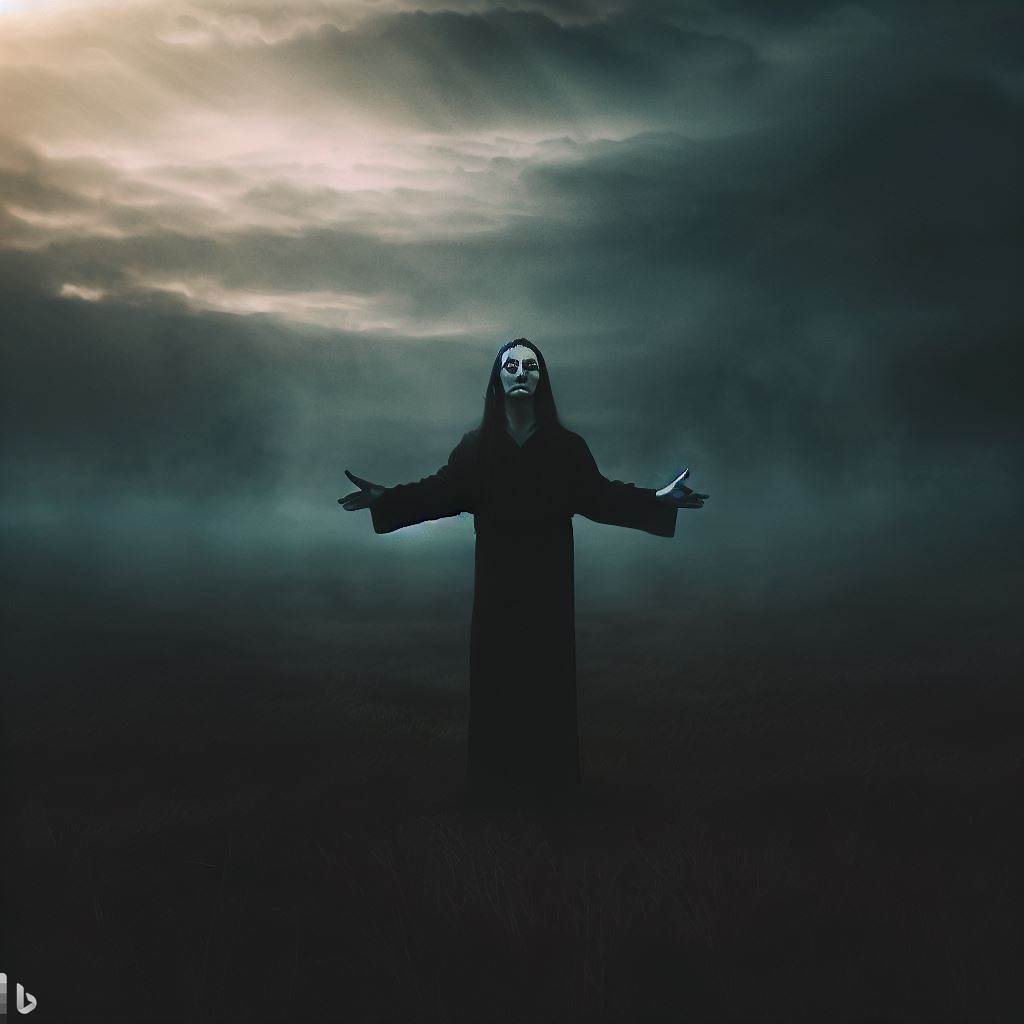
I am the shadow. I stand ever-present in the corner of room. I am only seen by those who know where to look. I remain unnoticed and forgotten, hidden in the darkness of my own complexion. The sun’s light is absent from my inferno, with only deaths cold embrace as my companion. This is my fate, my punishment for what I am.
I am a Black Man. My very birth was a crime in itself. Brought into this world, I was unaccepted, I was trapped and I am unwanted. I am the sprinter, with no shoes. I am but a builder, without bricks. I am a lock, without a key, shut permanently from the world. I am a man born without freedom, without choices, without life itself.
Long ago, in distant memory, I had a time of blissful ignorance. A time of my youth, this was a time when I was unaware, a time when I used to dream. I once had dreams of a future. I was to become a doctor. I was going to help people. I was going to save people. I was going to be the difference in this world.
That was a long time ago. Like a dream that has long since faded away from recollection. A period from my life that appears more imagination that an actual memory. Dead, Along with the fool that dreamed them. What use is the shell, the façade of a man? What could I have done? I was born into Apartheid strong Africa.
I was born as Michael, a Zulu. I had been given a life of nothingness. I’ve been left alone, forgotten by the world of capitalism, by a world too busy in its daily grind. This was the life set for us blacks here in South Africa.
My life frozen in gridlock, at a standstill, motionless as the rest of the world carried on without a single care. With no alternate route, no way forward, I had no hope.
This is the story of my transformation, my acceptance and my rebirth.
It all started promisingly. As a youth, I was optimistic. I had no reason not to be. My family owned our own coffee shop in the centre of town. Each day my father would dry and grind the coffee beans, make the coffees and maintain the equipment. While at the same time mother would take orders, count the money and clean the shop. Each and every morning I would attend school, and in the afternoons I would help in the shop with my brothers and sisters. Daily Life wasn’t easy, with early starts and late nights, but it was simple. It had a routine, it had meaning.
We used to be the businesses, we used to be the car dealerships, and we used to be the people. All of which means nothing now. Distant memories that feel more like dreams than events of the past. Memories some say best left forgotten, as in the struggle it is better to be blissfully ignorant than emotionally vulnerable.
One memory from such a time in particular stands out in my mind. It was your typical evening of my youth. I raced around the store chasing my brothers in the everlasting game of tag. With time rapidly running out, I didn’t want to finish the night the dreaded loser, so I ran harder and cut my corners. In doing so I did the unthinkable. As I reached within an arm’s length of my eldest brother, I took a misstep and ran head on into a ‘coloured’ customer enjoying his afternoon brew. A large crash and tumble ensued. Next thing I know, the two of us sat in a tangled heap on the floor with burning coffee spilt all over us. The man shot up, shaking the coffee out of his hair. In hysterics he yelled, labelling my family as ‘tainted’ and ‘black scum’, before bursting out of the store with a flurry, in clenched fist fury. I remember the look of pity my mother gave me, holding me in her arms, comforting me.
Comfort… an emotion that left my life for so many years. Years I spent living without family, without the warmth of embrace, without the soul of existence. That fateful day in 1958 made sure of that, the day that Apartheid law became my life.
Like it was yesterday, I can still remember as armed guards broke into our home in the shadow of night. Machine guns slung on their shoulders, as they pushed my family from our beds. Reeking of sweet and blood, the men flung us from our houses, hitting whatever got in their way, be it person or treasure.
Gathering outside, we were told that we no longer had rights to our property. We ‘black scum’ were living in ‘white’ territory, in which we were deemed unfit to live. This was the world in which I had been born into, where the colour of one’s skin dominated the life he could live.
We had been thrown from of our homes, with little more than the rags on our backs. As my father left the house, he held his head high, determined to show how strong we were. My father was a very proud man.
My family was relocated to a black settlement, a place where us ‘blacks’ could live out of sight and out of mind. My new home was a township, or what you may call a Shanty or a tin village. The internet tells stories of these townships, of poverty and of life lacking of even the basic necessities. It has none such luxury, those photos and stories lie, failing to capture the inferno that had become my household.
We were thrown onto a barren landscape. Red-black dried earth became our carpets, an absence of lush trees our surrounding fence. There was no water, but instead we drunk from the lakes of despair. All we had between us were a few blankets and couple of loaves of bread. Life was hard.
For the next ten years of my life, this habitat unfit for an animal became by home. This township became my hell, my eternal punishment for being born with black skin.
Growing into a metropolis of crude iron and tin buildings, the township became the very definition of a slum. Diseases and filth soon followed, taking my youngest siblings with them. By the end of it there wasn’t even the strength of will for a proper burial, instead the dead fell as they lay, including the bodies of my youngest two sisters. I recall thinking that the dead were the lucky ones, forever escaping torture that ‘life’ had become.
Each day my father and my eldest brothers were shipped into Cape Town to work as domestic servants, the bus drivers, the rubbish collectors, the sewerage workers. The hours long, the pay criminal.
These once proud men had been reduced to slaves, existing as mere shells of their former selves. These were the lucky few; most men and women couldn’t find work. Those that couldn’t find woke, instead spent each day in varying emotional states of self-pity, without an income to buy their daily meal, just waiting to die.
Each night, my father, on his return would collapse in heaps where he stood, crying of what had become of us, of what Africa had become.
As time went on, as day became week and week became year, things regressed. There is no law, no justice on the streets of hell. Ruled by gangsters and rapists, skills of theft and strength took the place of wisdom and determination. Violence, rape and burglary surrounded us on all sides, becoming the walls of our lives. Countless times women, including my mother and surviving sisters would be raped in the middle of a neighbourhood, in the open for all to see. No matter how much they cried, nor how loud they pleaded, their tears would fall on deaf ears. It became our abyss of torture. No longer were family structures sticking together ,no longer did friends trust each other; it became a battle, a constant fight for survival. Everyone was against you, everyone became your enemy. It became my crusade for existence. This was my individual pilgrimage of escape. This is a story of my attempt to get out; to become human and join the world.
It was during these dark times that I was reduced to my lowest. I did things that I am not proud of. I stole everything of value, anything that I could sell. If I suspected a neighbour was hiding wealth, I would beat them to a pulp just to make a few cents. Every day I was just trying just to get that next meal, to make it to tomorrow, to survive another day.
We were no longer men, beings possessing of humanity. We had changed; we have become the savages, the animals of Apartheid rule. Reduced by the law, ironically to the very things it claimed us to be; criminals and lesser people.
At my very worst, during a time when deaths warm embrace started to appeal. A time when eternal damnation almost seemed better than real life, I found my opportunity to live. It was during one of my many scavenger hunts for food, I came across a group of Afrikaners who were examining us young men for the monthly work rostering. Each month previously I had been refused for being too dirty and too black, no matter how much I cleaned myself with water and soap. Every time I threw myself in front of the restorers and allowed myself hope of a chance to stand equal, I was rejected and thrown back down into the depths of hell where I continued to live.
This time it was different. I told myself that this was my opportunity, that this was it. I presented myself as a 20 year old male named Thomas. I no longer knew my age, each day became a blur of night and day, and time no longer knew meaning. A new name also meant a new start, a blank canvas to work upon.
This was my lucky break. I was taken me in as the maid of an English family in town, who had requested the service of a Black man. I was provided shelter in the maid’s quarters and a paid income for the first time in my life.
It was the first time I slept inside for years, let alone in a bed. I had access to flowing and clean water, a protected shelter and I no longer had the regular struggle to survive. My daily life changed from running, scavenging and stealing to one of cooking, cleaning and attending. My life had meaning again, if only by routine. Each day started early, occupied by the varying duties of the household. I was given the very basic of luxuries, and yet my life improved dramatically. I stopped swearing, stopped hating.
However I did not regain hope. I still was a lesser being. Still an animal, an outsider, the pet to my masters will. I was merely an animal now domesticated, to work at the whim of my owners.
Each mistake was rewarded with punishment. I was not allowed to communicate with the children, I was to be seen and not heard. When they were entertaining guests I was either locked in the kitchen or the maid quarters, an embarrassment to look upon and blight upon the party, and humanity itself.
In the evenings I was often beaten by the master of the house and his wooden baton that he carried around with him. He was ‘cleansing Africa’ with each stroke, and once blood rushed the surface; he was one step closer to a better Africa.
Each blow hurt more than the first. Each progressive wound taking longer to heal than before. Each nights ‘cleansing’ resulted in a deeper bruise and a more painful scar on my body. These scars are my souvenirs of Apartheid. And yet, I took each blow without wincing.
I was the perfect servant, perhaps thankful for the attention. Fooling myself, perhaps brainwashed, that I had ‘deserved’ each blow and that actual progress was being made with each punishment. Nonetheless the fall of evening would mark the hour of the baton, and the cycle continued.
My life had moved from one hell to another. Instead of being the ignored, criminal slave of ignored black society, I became the blatantly obvious mistreated slave of inner white society. I had replaced my physical torture for a more intense emotional one, as each day took further from my faded soul and I drifted further and further away from humanity.
It wasn’t until ‘She’ stayed that I finally learnt the truth of acceptance, the equality of race, the truth of life. I never learnt her name, and I fear I never will. But I will never forget what she looks like. With her long flowing dark hair that parted in the middle of her head and caused one to focus on the middle of her face. Once focused, one’s gaze was met with big round expressive eyes joined by a gleaming white smile. Together forming a sense of radiant heat and perfect beauty, that caused a flutter in my heart. ‘She’ carried herself with such grace, that when combined with her slim frame, created an elegance that is unseen with white women in these parts.
‘She’ was beautiful, happy and free. Yet she gave me the time of the day, would speak to me when she saw me, would wish me a good morning and a good evening. Sometimes late in the evening once everyone would go asleep she would tell me stories about her far away land known as New Zealand; a land of ‘multiculturalism’. ‘She’ filled me head with ideas of an equal society, a just Africa, a country in which Blacks and Whites lived without fear of one another, like that of her country.
Slowly I learnt to dream again, eventually I learnt to live again. I not only was filled with ideas and possibilities, but for the first time since I was young I was accepted for who I was. After many secret hours together she taught me how to read and write. I became educated, I learnt about morals, about mathematics, about culture.
A distant relative of my masters, ‘She’ travelled to South Africa on a cultural exploration, eager to learn and explore. Each word spoken was like heaven to me, each smile given me erupted a volcano inside, causing warm lava like feelings to flow throughout my body.
And then suddenly after 6 months of living, she disappeared from my life forever. I was left alone again, returning to the world of the forgotten.
I was left, however, with the best thing of all, a gift that I never had. An object of hope, hope for the future. I had been redeemed of my past and my birth. I became accepted, I had been educated, and I am the one thing that money cannot buy you. I am a black man in Africa with a future.
 The StoryTeller